

Watermark
Add an image watermark to any PDF page with the Nitro API. Control position, size, opacity, rotation, and placement.
Watermark method of the Transformations endpoint lets you overlay an image onto specific pages of a PDF document.
You provide the PDF file and a watermark image as separate file uploads, along with parameters that control placement, sizing, and appearance:
-
boundingBox(required): The position and size of the watermark area as[x0, y0, x1, y1]in PDF points. See the bounding box guide for details on how coordinates work in the Nitro API. -
opacity: Controls the transparency of the watermark, from0.0(fully transparent) to1.0(fully opaque). Defaults to1.0. -
rotation: The rotation angle in degrees to apply to the watermark image. Defaults to0. -
pageIndices: An array of zero-based page indices where the watermark should be applied. If omitted, the watermark is applied to all pages.
-
flip: Optionally mirror the watermark image. Accepted values:horizontal,vertical, orboth. -
rotateWithPage: When set totrue, the watermark rotates along with the page if the page itself has a rotation applied. Defaults tofalse. -
centerOnPage: When set totrue, the watermark is centered on the page. Defaults tofalse. Also acceptscenter_on_page.
boundingBox is required when using centerOnPage.contentDepth: Controls whether the watermark renders above or below the existing page content. Accepted values:above_existingorbelow_existing. Defaults tobelow_existing. Also acceptscontent_depth.
contentDepth values use underscores: above_existing and below_existing. Some upstream specs incorrectly list these with hyphens — using hyphens will not work.fitToPageWidth: When set totrue, scales the watermark image to fit the full page width. Defaults tofalse. Also acceptsfit_to_page_width.
fitToPageWidth is true and fitToPageHeight is false, boundingBox must be provided for vertical positioning.fitToPageHeight: When set totrue, scales the watermark image to fit the full page height. Defaults tofalse. Also acceptsfit_to_page_height.
fitToPageHeight is true and fitToPageWidth is false, boundingBox must be provided for horizontal positioning.Supported Image Formats
The watermark image can be provided in the following formats:- PNG (recommended)
- JPEG
- TIFF
- GIF
- SVG
.png will be rejected.Example
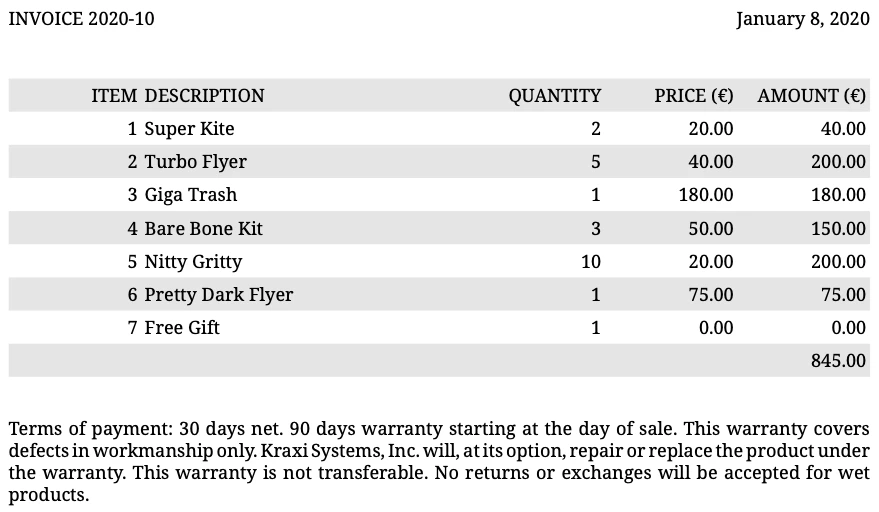
Original PDF
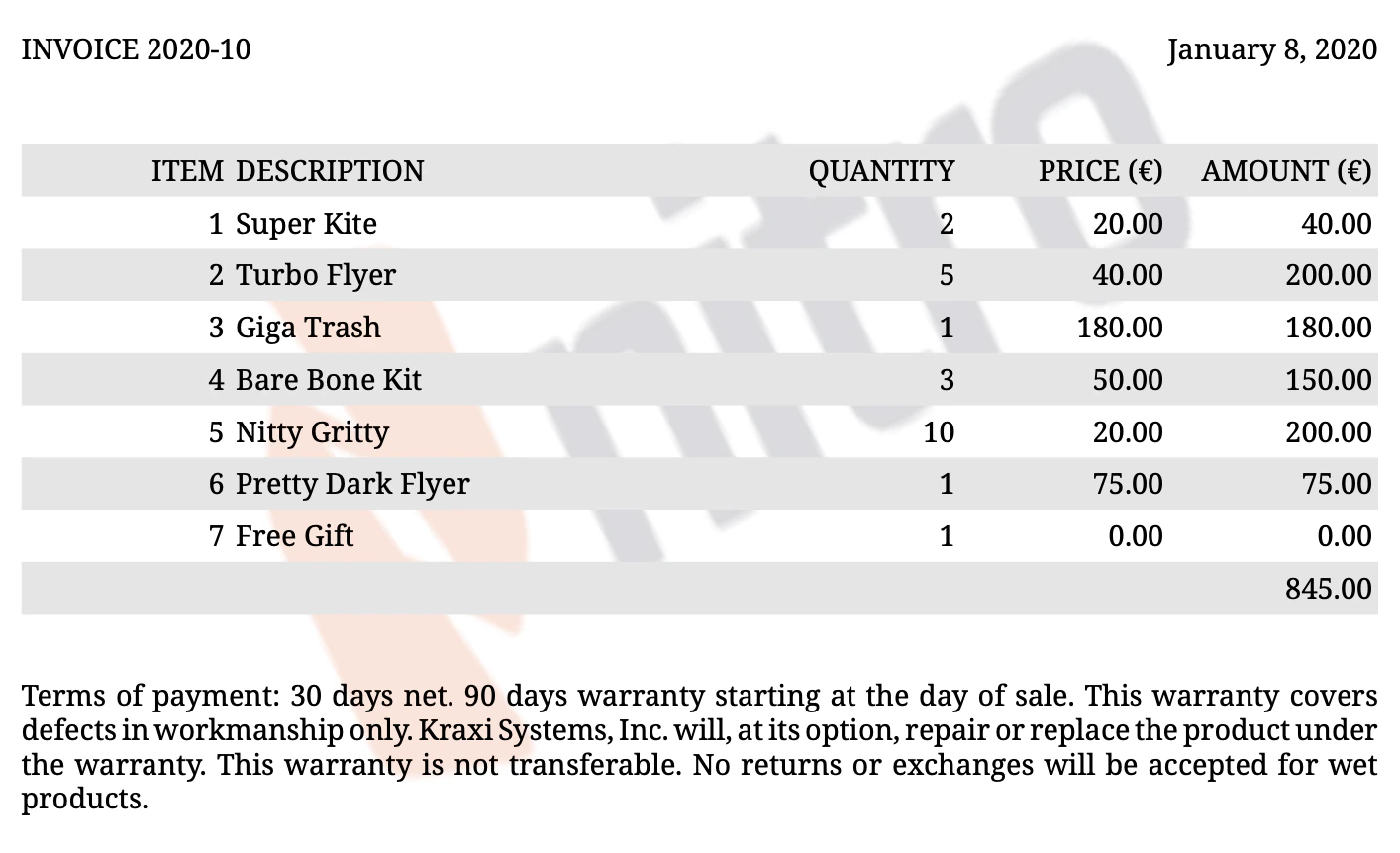
Watermarked PDF
File Upload
Unlike most transformation methods that accept a singlefile field, the Watermark method requires two files uploaded via the files parameter:
files[0]: The source PDF documentfiles[1]: The watermark image
Output File Format
The endpoint can return output either as JSON or as a binary file. The format depends on theAccept header (details below), which defaults to application/json.
Processing
When requesting JSON, you can run the operation synchronously or asynchronously. This is determined by thePrefer header (details below).
- In sync mode, the response includes a URL pointing to the processed file.
- In async mode, the request creates a Job, and the response contains the Job ID and status so you can track progress.
Custom File Delivery
The endpoint supports custom file-delivery destinations through the optional delivery parameter. You can provide an upload target, such as your own PUT endpoint or a pre-signed S3 URL, and Nitro will upload the resulting file there. This works for both synchronous and asynchronous processing.-
Sync delivery
In synchronous calls, the delivery parameter lets you direct Nitro to upload the output file to a custom URL endpoint or a pre-signed URL (e.g S3), by providing an upload url in theuploadResultTooruploadResultsToproperties.Custom endpoint
S3 delivery
If you are using S3 to manage delivery uploads, follow this AWS documentation to generate a pre-signed PUT URL. -
Async delivery
In asynchronous flows, you can also provide a custom URL or pre-signed S3 object viauploadResultTooruploadResultsTo, to upload your file(s) once the Job is done processing.Callback
For asynchronous processing, you can also include a callback URL within the delivery parameter. This callback is a POST endpoint that Nitro will call once the Job is created and running, providing details about the file-processing job. Example of Nitro’s callback request body:
Response behavior Matrix
This matrix shows the expected response behavior based on content type, sync/async mode, and custom file-delivery settings.Limits
The Platform API has the following limits:- File size: Maximum of 100 MB per request for direct uploads and synchronous requests; asynchronous requests with remote-file (URL) input allow up to 300 MB. This applies to single-file and multi-file requests (multi-file requests are limited by their combined size). Some operations allow more — Merge accepts up to 1.5 GB for asynchronous remote-file input.
- Page count: Maximum of 500 pages per individual document, or 2500 pages for asynchronous requests with remote-file (URL) input. This applies to single-file and multi-file requests. Multiple documents may exceed the page limit in total.
- Retention time: Inputs and outputs are deleted approximately 15 minutes after the operation completes.
Request
Authorizations
Bearer authentication header of the form Bearer <token>, where <token> is your auth token.
Headers
Controls response format and behavior. See endpoint description above for detailed response combinations.
application/json: Returns JSON response with operation resultapplication/octet-stream: Returns binary file content*/*: Defaults to JSON response
application/json, application/octet-stream, */* Controls synchronous vs asynchronous operation. See endpoint description above for behavior details.
respond-async: Makes request asynchronous, returns job status for polling- No value: Synchronous response
respond-async Body
The Transformations' endpoint method: watermark
watermark Parameters controlling watermark placement, sizing, and appearance on each PDF page.
The files to process. They can be provided as a binary uploads or as a JSON with remote file references.
This endpoint lets you supply your own URL to receive the single-file output. The URL may point to a custom API endpoint or a pre-signed S3 URL.
The HTTP method defaults to PUT, but you can change it based on your implementation needs via the verb parameter. You can also provide custom headers, such as authentication headers or any others required by your endpoint.
Response
Returns either JSON or binary output depending on the Accept header (defaults to JSON). JSON responses include a file URL for synchronous tasks or a job status for asynchronous tasks.
- Sync - Single File
- Async - Job